Jul 31, 2026


4 minutes
min
Beyond Points and Discounts: Six Trends Shaping the Future of Rewards in the UK
Pricing Strategy











Every loyalty agency and platform provider has had this conversation with a client. The program is enrolling members, the tech is working fine, and all the dashboards look healthy. Yet this still isn't translating into the repeat customer behavior everyone promised.
It's a familiar, frustrating pattern. Practitioners can feel in their gut they know the root cause of engagement stalling, and the data backs up.
Across the industry, roughly half of all earned loyalty rewards go unredeemed in a given year. In the US alone, that adds up to an estimated $10 billion in unspent loyalty value annually, according to Antavo's Global Customer Loyalty Report.
Dig a layer deeper and the picture gets more specific.
Around 53% of enrolled members are transaction-active, but only 35% are redemption-active (meaning they've actually claimed a reward). That gap between transacting and redeeming is where most of a program's intended commercial impact disappears.
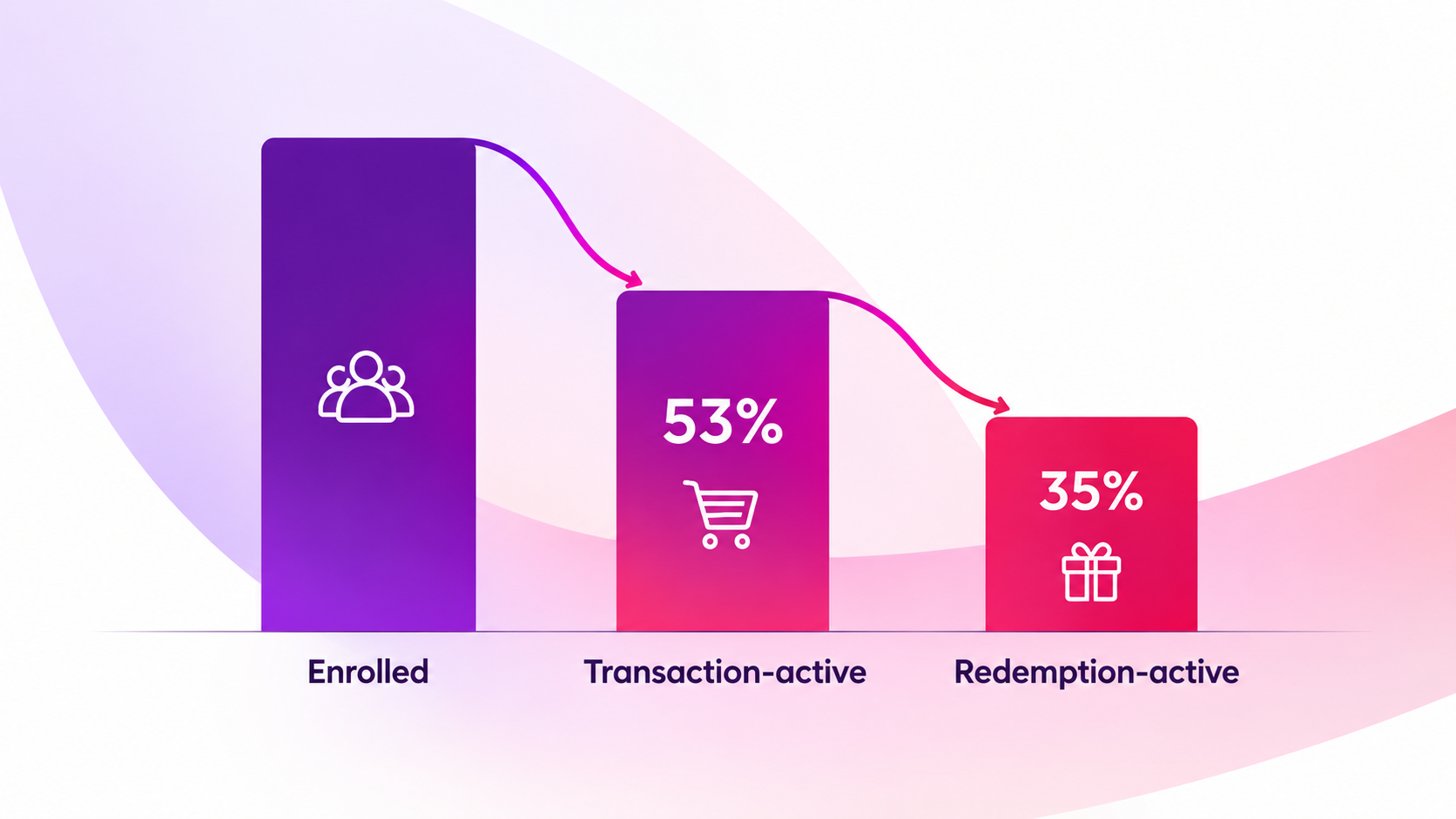
For an agency or software provider, that gap is what shows up in the Quarterly Business Review as a stalled repeat-purchase curve. Leaving the client asking why engagement plateaued after month three.
It makes the scheme renewal conversation harder than it should be.
A catalogue can look complete, with thousands of SKUs across gift cards, travel, and merchandise, and still fail at the one job it has: giving someone a reason to come back.
"As loyalty programs mature, brands are looking beyond scale alone," says Gabi Kool, CEO of Loylogic. “The programs pulling ahead are the ones building reward ecosystems that are smarter and more relevant, not just bigger.”
The standard response to underperforming redemption is almost always the wrong one.
Add more SKUs. Refresh the catalogue quarterly instead of annually. Run a promotional push. Etc, etc.
But none of that addresses why members aren't redeeming in the first place. None of it moves the one metric that truly matters to a client's business: repeat custom.
Many underperforming reward catalogues aren't small. In fact, they can be seemingly too big - and by that we mean too broad and too flat: a long, undifferentiated list of items with no real logic connecting a member to the rewards most likely to inspire them to change their behaviour.
Breadth gets confused with quality constantly in this industry. It's an easy mistake to make. A catalogue with 15,000 items feels more impressive in a sales pitch than one with 1,500.
But size was never the sole variable that drove repeat behavior. Relevance was.
Think about what happens when a redemption misses. It's not that the member complains. Usually they silently disengage. There’s no negative review or support ticket to act on. Just one less reason to open the app next quarter.
There's a useful way to think about why this happens, and it's less about loyalty mechanics than basic human psychology.
Imagine standing up at a close friend's 50th birthday, someone you've known for thirty years, and handing them a generic gift card. It's not ungenerous. It just falls flat. You've become the lazy friend: technically present, but emotionally absent.
Reward programs make this exact mistake constantly, at scale, without anyone noticing.
A missed redemption doesn't announce itself the way a bad gift does at a party. Instead it shows up later as a member who never comes back to redeem again.
It's a story we discuss often on the Loylogic Podcast. Inside the company, it's what we call the lazy friend analogy, and it's become shorthand for the exact failure mode most catalogue audits miss.
"Customers want more choice" isn't a useful diagnosis. If you've sat in a client meeting defending catalogue performance, you already know that.
The real diagnostic questions are more specific and separate those who understand reward infrastructure from those who've simply licensed a catalogue and hoped for the best.
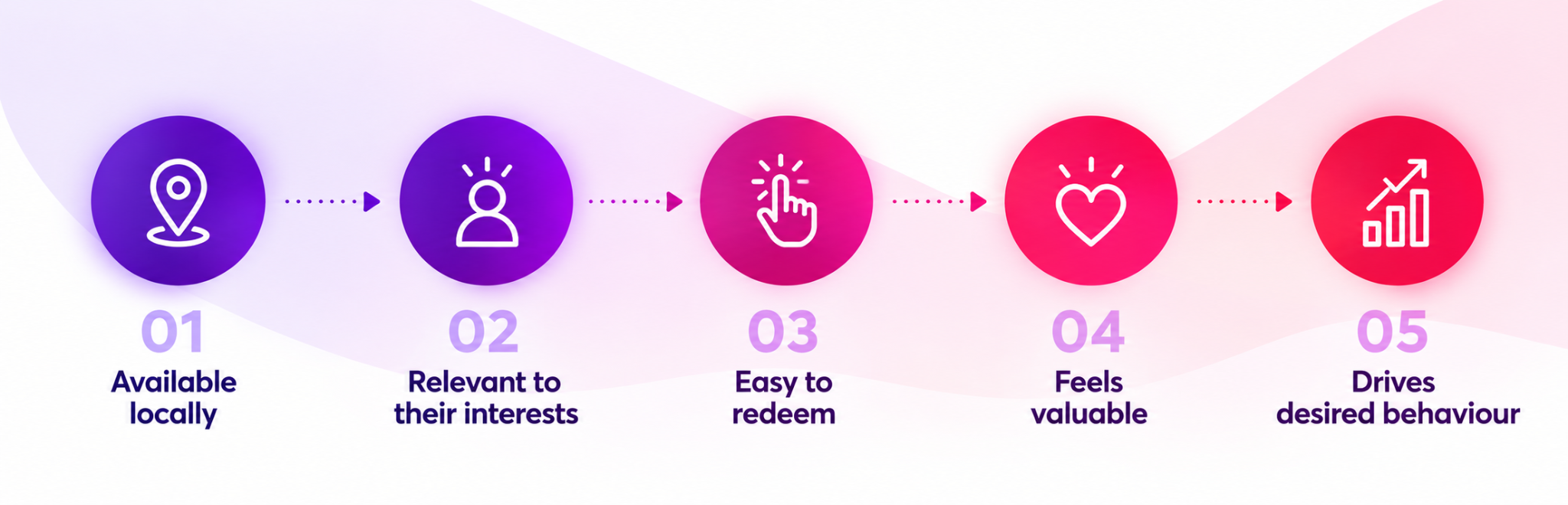
Seems obvious, but a catalogue that looks global can often really be a US or UK catalogue with a currency converter bolted, which will underperform everywhere else it claims to serve. Members in Manila, Dubai, or São Paulo redeeming against a catalogue built for North American shopping habits will find plenty of items technically "available" yet functionally irrelevant.
Members compare, even when they don't say so. If a reward can be checked against Amazon or a local retailer and comes up short, the points used to buy it start to feel diluted rather than powerful. That perception damages the next redemption decision, even if the member never mentions it.
A reward that requires an awkward voucher code, doesn't support local payment preferences, or forces a clunky checkout flow will lose redemptions before the member experiences the joy of receiving the product.
Rivo's 2026 loyalty research found that 65% of consumers say they'd abandon a loyalty program outright if rewards were hard to access or not worth the effort.
That's not a minor UX complaint. It's a program-ending failure point.
Tier-based personalization (gold, silver, bronze) is table stakes now, not a differentiator.
The providers pulling ahead are moving past segment-level relevance toward something closer to individual relevance: treating the member as a person with specific tastes, not a bucket within a spend threshold.
A catalogue that visibly belongs to a third-party vendor rather than your clients’ own environment undermines the trust the brand spent years building. Every banner, every collection, every "thank you" moment should be read as theirs, not as someone else's marketplace with their logo stuck on top.
Most catalogue conversations skip this entirely, yet it’s killing performance.
A catalogue can be perfectly designed on a whiteboard and still fail in production because nobody accounted for fulfillment reliability, supplier consistency, or what happens when a popular reward goes out of stock in one region and stays listed anyway.
None of these six are catalogue problems alone. In fact, they represent relevance, trust, and operational problems.
That's exactly why simply adding more SKUs rarely fixes underperforming redemption. It usually just adds more noise to a catalogue that was already failing to connect.
It's worth being precise about the mechanism here, because "redemption" and "repeat custom" are related but not identical. Conflating them can lead to the wrong fix.
A single redemption is a transaction. Repeat custom is a behavioral pattern. And the data on how those two connect is genuinely striking.
That's not just correlation with already-engaged customers, as there's a behavioral chain underneath it…
Practitioners sometimes call this the loyalty flywheel.
It's a useful mental model, but the flywheel only spins if the first redemption lands.
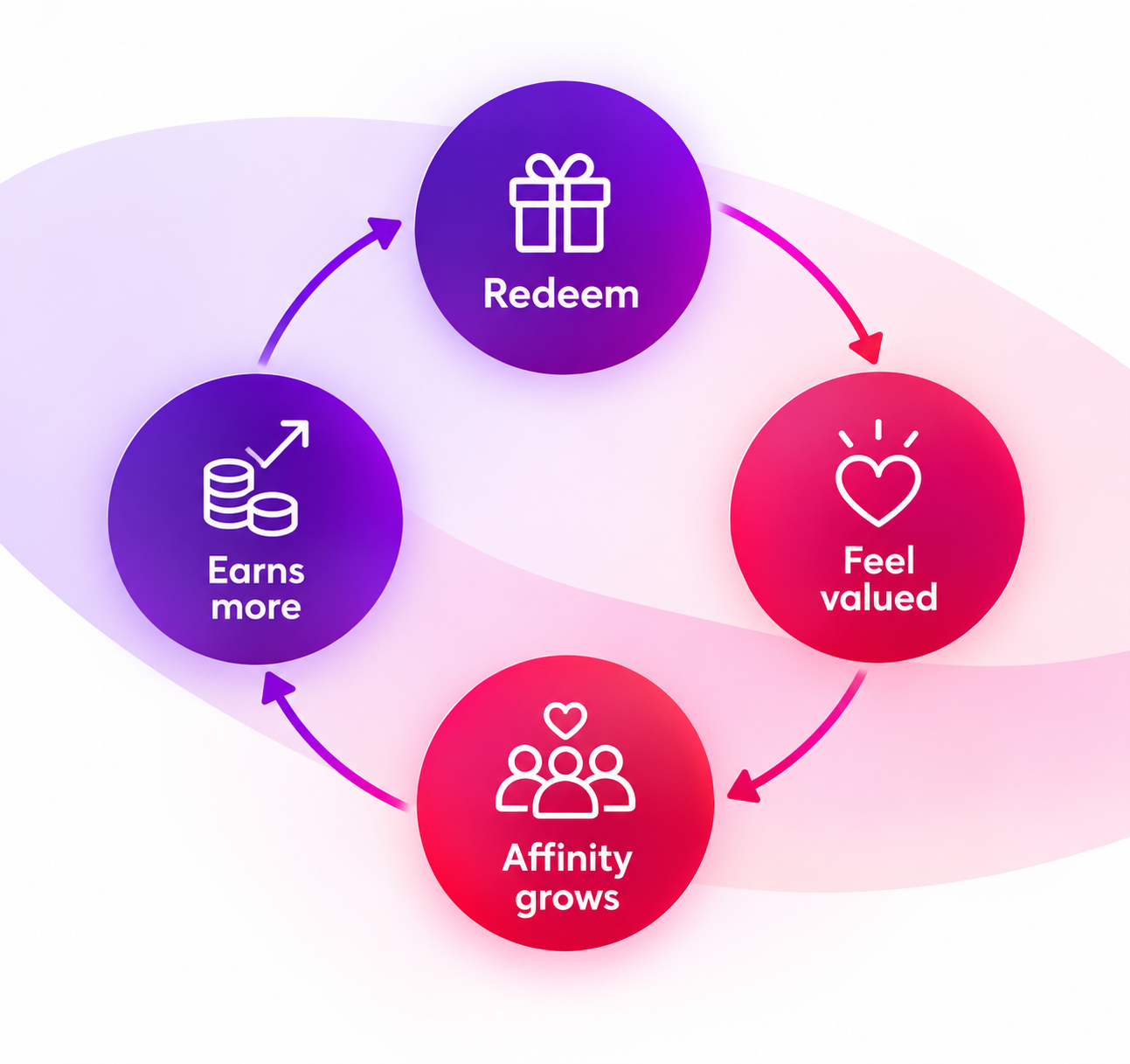
A generic, poorly matched reward doesn't just fail to move the member forward. It can stall the entire mechanism before it gathers any momentum.
This should change how agencies and platform providers pitch catalogue improvements internally. The business case for a better catalogue isn't "members will be happier." It's this: redemption-active members are worth multiples more than transaction-only members, and the catalogue is the single biggest lever determining which category a member falls into.
None of this requires you to become a reward-sourcing operation overnight (and frankly, most shouldn't try). Building and maintaining global reward supply, managing hundreds of individual suppliers, and keeping pricing competitive against retail benchmarks across international markets is a full-time infrastructure business in its own right.
But there's a set of things providers can do regardless of whether they build that capability in-house or work with an infrastructure partner like Loylogic behind the scenes.
Before recommending catalogue expansion, look at redemption-active rate by market and by segment, not just total redemption volume. A catalogue that's technically enormous but redemption-active in only two of the twelve markets it claims to serve is a localization gap that will hinder scale in the long-term.
Tier-based catalogues were the right answer five years ago. The next layer is understanding the individual member: what they've redeemed before, what they've browsed and not redeemed, what similar members in their market actually choose.
This is where AI-driven catalogue curation earns its place as a genuine mechanism for narrowing a vast catalogue down to a bespoke, then eventually individual, selection. So the marketplace provides reach and scale, human program judgment provides the context and AI curation presents choice at an individual level.
Local payment methods, points-plus-cash options, and fast, familiar checkout flows are the difference between a member completing a redemption they were already motivated to make, and abandoning it three screens in.
A branded storefront that feels like a natural extension of the program, not a pop-up marketplace with someone else's feel to it, protects the trust that made the program worth joining in the first place.
This is a genuinely easy win that gets overlooked constantly, usually because it's treated as a design task rather than a retention lever.
If reward fulfillment, supplier reliability, or market coverage is inconsistent, no amount of front-end personalization will fix redemption rates. The member will hit availability or delivery problems before they ever feel the benefit of a well-matched reward.
This is the least glamorous fix on this list, but in our experience, it's also the one most likely to be responsible for stalled numbers.
For those with development resources, there's a temptation to treat catalogue expansion as an internal build project: another supplier integration, another set of contracts, another feed to maintain.
Every additional supplier adds its own onboarding process, pricing logic, inventory feed, and support escalation path, and that complexity compounds every time a client asks for a new market or category.
A headless, API-first approach to reward supply means you can expand what’s on offer without expanding what the engineering team has to maintain. That matters just as much to the IT lead evaluating the roadmap as it does to the account director trying to keep a client happy.
The industry's instinct for years has been to compete on catalogue size: more SKUs, more categories, more markets, more everything. That instinct made sense when reward marketplaces were still relatively immature and simply having enough inventory was itself a differentiator.
That era is ending.
The providers pulling ahead now aren't simply those with the biggest catalogues. They're the ones whose catalogues consistently put the right reward in front of the right member, in a market where it's available, at a price that feels fair, through an experience that doesn't introduce friction. And they can do that reliably across every market, without the client, or the agency serving them, having to manage the operational mess of dozens of fragmented suppliers to make it happen.
That's a genuinely different capability that shows up in the numbers that matter: not enrollment, not even transaction volume, but the repeat behavior that determines whether a loyalty program is delivering ROI.
The answer has never been more rewards alone. It's making sure that whichever reward a member sees next feels like it was chosen just for them. Because increasingly, with the right infrastructure behind the catalogue, it actually was.



Get in touch for a personalized demo and see how our reward solutions can help your business grow.