There's no single best global channelincentive platform. The strongest international programs pair an"earn" layer chosen for your channel model (channel incentivemanagement software, a PRM platform, or a full-service incentive company) with arewards infrastructure layer that sources, localizes and delivers rewardspartners value in every market.
Channel teams have never had more software to choose from. Claims engines, rebate automation, PRM platforms with incentive modules, agencies with their own technology. Most of it is very good at working out who earned what.
But an issue often reveals itself when the program crosses aborder.
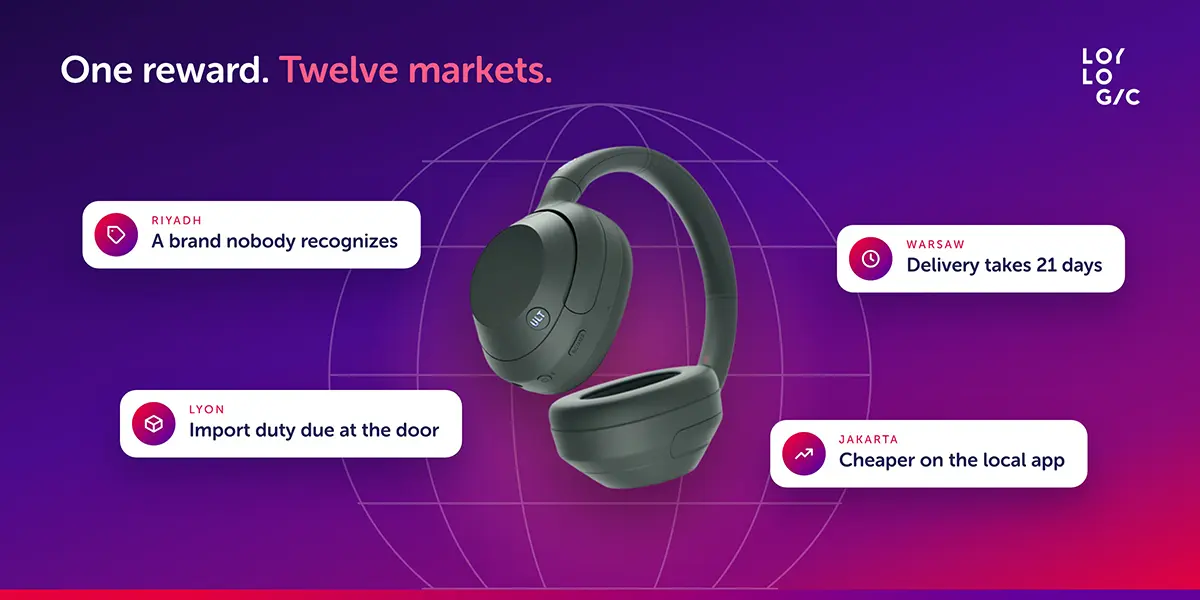
A reseller rep in Riyadh logs in to redeem and finds brandsshe's never shopped at. An installer in Lyon orders a reward that takes threeweeks to arrive and then needs a plug adapter.
Nothing in the claims engine is technically broken, yet theprogram still loses both of them.
That matters more than it used to. The Incentive Research Foundation's April 2026study, Using Incentives to Drive Pipeline, found that partners often juggle 10 to 50 incentive programs but actively take part in only about half of them. The IRF named clarity, simplicity and perceived value as essential. Perceived value gets decided at the moment of redemption, and if your reward experience is weak in a market, that's the market where your program lands in the ignored half.
So the better question isn't which platform is best. It'swhich combination gets the right reward to the right partner in each market,without your team running a supplier network on the side.
Global channel rewards platforms compared: the four categories
Global channel incentive platforms fall into four categories. Channel incentive management (CIM) software automates rebates, SPIFFs and market development funds. PRM platforms run the partner relationship and increasingly include rewards modules. Full-service incentive companies design and operate programs. Rewards marketplace infrastructure sources and delivers the rewards themselves.
Most global programs need at least two of these.
Category
What it does best
Examples
Earn or burn
What to check for global programs
Channel incentive management (CIM) software
Rules, claims, rebates, SPIFFs, MDF and co-op funds, payout accuracy
How it plugs into the platform or agency in front of it
Buyers often compare across these rows as if they were the same product. They aren't, and the more useful comparison is how well the layers fit together.
The vendors themselves treat it as a stack.
Impartner's Rewards Management module tracks what partners earn and is designed to sync rewards data to CRM or other external systems for fulfillment. Maritz has spoken publicly about working with Onbe so channel partners can take incentive value in the digital form they prefer. Having specialist layers behind the program owner is normal practice at the top of the market.
A quick word on terms, because they come up throughout this piece. Earn covers rules, eligibility, claims, tiers and accrual. Burn covers what a partner can redeem, at what value, delivered how and where. This guide spends most of its time on burn, because that's where international programs tend to come unstuck.
Why do channel incentive programs break when they scale internationally?
International channel programs rarely fail on rules or pay out logic. They fail at redemption: rewards that aren't available or relevant in the partner's market, prices that look poor next to local retail, slow or unreliable delivery, and tax or compliance exposure nobody planned for. Each one erodes perceived value, which is what decides whether a partner engages.
The catalog was built for headquarters
Plenty of "global" catalogs are domestic catalogs with international shipping switched on. The gift card brands are American, the merchandise suits one climate and one set of interests, and the experiences cluster in a handful of cities. Electronics are a good stress test. A laptop with the wrong keyboard layout, or a kitchen appliance with a warranty that isn't honored locally, tells a partner the program wasn't built with them in mind.
Cultural fit is harder to spot from headquarters, because no shipping table will flag it. A wine-tasting experience or a champagne hamper as no business in a catalog served to reps in Saudi Arabia. Branded apparellisted only in US sizes leaves a rep in Seoul guessing. A grill set pushed as the summer reward arrives in Sydney in July, in the middle of winter.
Timing matters too. A partner campaign in the Gulf thatignores Ramadan, or one in Asia that ignores Lunar New Year, misses the momentswhen rewards carry the most weight. The same goes for the gap between earningand receiving. A reward that turns up weeks after the quarter closed thanks thepartner for something they've already moved on from, and the link betweeneffort and reward, which is the whole point, goes with it.
Partners check prices
Reps redeem on their phones, and the local marketplace app is one tap away. If 40,000 points buys a pair of headphones that costs noticeably less at a local retailer, the program looks stingy, however generous the points budget was. Reward value is economic and psychological at the same time. Points should feel like they go further than expected, never like they've been marked up.
Cross-border fulfillment is where goodwill disappears
Ship a reward across a border and someone pays import dutyand VAT. If it's the partner, collected at the door, your thank-you has becomea bill. Add customs holds, three-week delivery windows, returns that have totravel back across the border, and a support line that only works in English, and the reward costs more goodwill than it creates.
Points don't hold their value across currencies
Run one points currency across 20 local currencies and exchange rates will move under it. Without active repricing, a point buys less in a market where the local currency has weakened, and partners there notice before finance does.
A hypothetical: one SPIFF, twelve markets. A networking hardware vendor runs one quarterly SPIFF across 12EMEA markets through its PRM. The rules are identical everywhere. In the UK and Germany, redemption is healthy. In Saudi Arabia and Poland, it stalls. Reps there see brands they don't recognize, delivery runs to three weeks, and the reward card doesn't work at the stores they use. Same rules, same budget, very different perceived value, and nothing in the earn logic explains the gap.
Does the reward still matter in B2B channel programs?
Yes, though differently than in consumer loyalty. Partner businesses respond to margin, rebates and MDF. The individual rep, installer or account manager responds to rewards that feel personal and arrive while the effort is still fresh. Strong channel programs fund both, and the individual layer is where loyalty to a vendor gets built.
A distributor principal cares about the rebate check, and no branded backpack will move a quarterly number. But much of what vendors now want from the channel happens at the level of individual people. The IRF found that best-in-class programs reward behaviors beyond the final sale, such as training, enablement tool usage, deal registration and demos, and often put40 to 50% of the budget toward these pre-sale actions. It also found that dealer principals, sales reps and technical teams respond to different levers, as do the top 20%, middle 60% and bottom 20% of performers. Those are individual behaviors rewarded at an individual level, which is exactly where reward relevance decides the outcome.
Picture your best reseller rep closing a stretch target after a brutal quarter. The program thanks her with the same top-tier reward every market gets: a signed NFL jersey. But she lives in Milan and follows Inter. It's generous on paper and flat in practice. At Loylogic we call this the lazy friend problem: the moment where gratitude should land, met with something that shows no thought.
The fix is rarely a bigger budget. It's a better match. Fora channel audience that might be:
Learning rewards such as online courses and professional certifications, which also build the capability you're trying to incentivize
Experiences in the partner's own city, rather than a catalog of events in places they'll never go
Incentive travel or money-can't-buy experiences reserved for the top tier, where exclusivity does the motivating
Practical everyday rewards in markets where that's what partners value most, delivered instantly and in local currency
A redemption that feels personal does something a rebate can't. It makes the partner more likely to register the next deal with you rather than the vendor down the hall. Burn drives earn.
What to look for in a channel rewards solution
Look for real local coverage rather than "shipsto," curation by market and partner role, prices that hold up against local retail, accountable fulfillment and service, built-in compliance support, API integration with your PRM or CIM, white-label branding, a transparent commercial model, and redemption data you can feed back into ROI.
Here's a scorecard you can use. Score each criterion 1 to 5for every vendor on your shortlist, and weight the rows that matter most toyour markets.
The Channel Rewards Infrastructure Scorecard
Criterion
What good looks like
Question to ask the vendor
1. Market coverage
Rewards sourced and fulfilled in-market for your priority countries, with cross-border shipping as the exception
“For our top ten partner markets, what share of the catalog ships domestically?”
2. Local relevance and curation
Catalogs configured by market and partner role, with AI narrowing a large supply base to what each audience redeems and people governing the result
“Show us the catalog a sales rep in our hardest market would see, and explain how it was chosen.”
3. Reward value
Prices that compare well with local retail, and a points value that stays consistent across currencies
“How do you benchmark reward prices against local retail, and how often do you reprice for exchange rates?”
4. Fulfillment and service
One accountable party for orders, delivery, duties, returns, damaged goods and local-language support
“Who handles a return in Brazil, and in what language?”
5. Compliance and governance
Support for tax reporting, sanctions screening, data protection and anti-corruption controls, with audit trails
“What do you provide for tax reporting on rewards to third-party reps, and where does their personal data sit?”
6. Integration
Headless API and connectors into your PRM, CIM, CRM or partner portal, single sign-on, and a clear answer on which system holds the points ledger
“Which system is the ledger of record, and what happens when a balance and an order disagree?”
7. Branding
A white-label storefront in your brand, or your client's
“Will partners ever see your brand anywhere in the experience?”
8. Commercial model
Clear funding terms (pay on redemption or prefunded), breakage treatment, exchange rate exposure and margin transparency
“If redemption runs well above forecast, what does that cost us, and who carries it?”
9. Measurement
Redemption and engagement data that flows back into your earn platform and reporting
“Can we see redemption by partner tier and market inside our own dashboards?”
10. Speed to launch
A fast pilot option with a ready-made reward currency, plus a path to a fully embedded build
“How quickly can we pilot in two markets without an integration project?”
Measurement deserves more weight than it usually gets. The IRF recommends measuring Return on Incentive Investment: incremental gross margin minus program cost, divided by program cost. It also warns that once a program lifts performance, leadership tends to treat the lift as the new baseline, so owners have to keep proving incremental impact to protect the budget. You can't do that if redemption data is stuck in a supplier's spreadsheet.
How to evaluate channel rewards infrastructure before you sign
Test it the way a partner would experience it. Pick your three hardest markets, browse the catalog as a rep in each, compare prices with local retailers, place real orders, time delivery and returns, request compliance documentation, and model costs at different redemption rates. A demo shows you the platform. A pilot shows you the reward experience.
Choose the markets most likely to break the program. Not your biggest markets. The ones with unfamiliar brands, complicated import rules or a volatile currency.
Mystery-shop the catalog. Log in as a sales rep in each market. Count the rewards you'd personally want. Check 20 items against local retail prices.
Place real orders. Order something physical, something digital and an experience. Time each one, then return one and see what happens.
Ask for the unglamorous documents. Tax reporting support, a data processing agreement, the sanctions screening process and supplier standards. A vendor that has done this at scale will have them ready.
Walk through the integration with your earn platform. Cover the ledger, single sign-on, order status flowing back to the partner portal, and how failures are handled.
Model the economics at low, expected and high redemption. Include exchange rate movements and breakage assumptions.
Ask what the platform learns. How will redemption data change the catalog next quarter? This is where AI should earn its place. It might spot that installers in one region redeem tools and training while sales reps redeem experiences, and adjust what each group sees, with your team approving the change.
Where does rewards infrastructure fit alongside your incentive platform oragency?
Rewards infrastructure sits behind your channel incentive platform or agency. Where a platform or agency runs the program, it keeps program design, rules and the partner relationship. The infrastructure layer supplies the catalog, pricing, fulfillment and redemption experience in every market, white-labeled so partners only ever see your brand. One integration replaces a web of supplier contracts.
This is the layer Loylogic builds. Our Global Rewards Marketplace covers 190+countries, 100+ reward categories and a supplier network of 150+, with AIcurating what each market and audience sees and our team governing the result. It plugs in three ways, depending on how much you want to build:
Plug-and-Play with Stars, a ready-madereward currency, for programs that need to launch in days
Enterprise configuration using your own currency and branding, typically live in weeks
Headless API for embedding the catalog, checkout and fulfillment directly into a partner portal, PRM or CRM through our enterprise integration layer
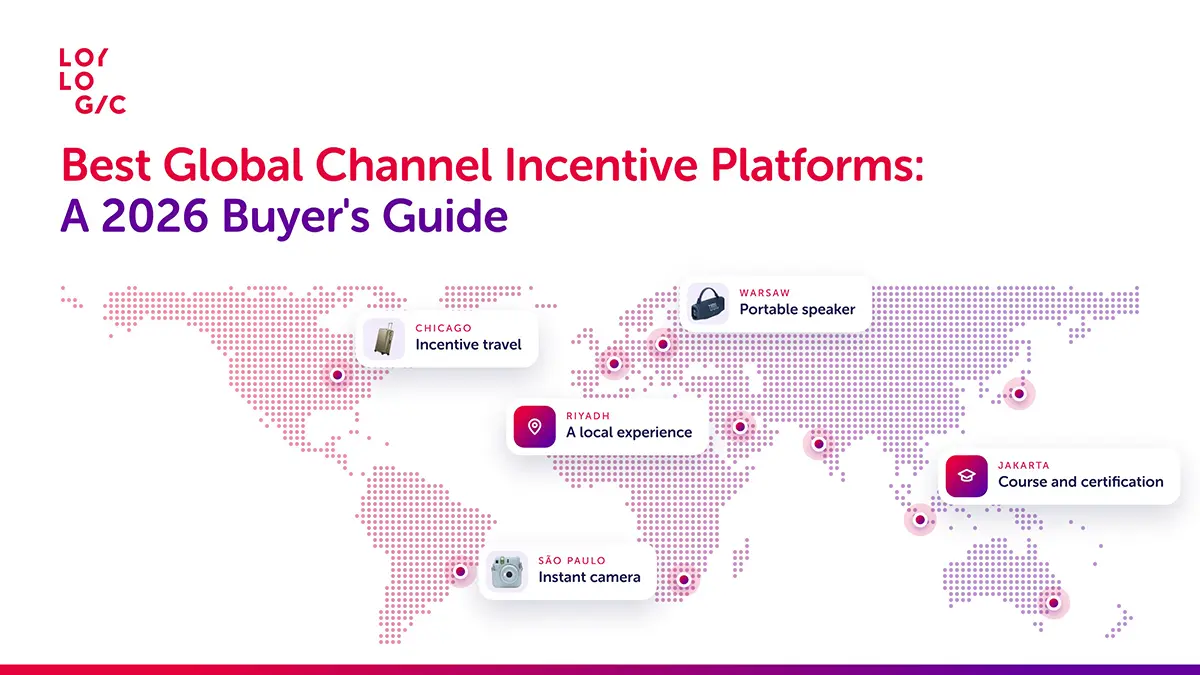
Incentive agencies and platform providers can offer clientsa global reward experience without building or running a supply chain. We don't own the partner relationship, and where a platform already runs the earn side,it stays the system of record while we power redemption behind it. Brandsrunning channel programs in-house get a redemption experience that works as ell in Jakarta as it does in Chicago.
For programs without an earn engine of their own, or teams that want to start before a full platform rollout, our channel performance tools can add the earn side as optional modules alongside the marketplace. Behavioral Activation rewards partner actions and milestones in real time, through challenges, spend milestones and instant-win mechanics. Currency & Wallet governs how points are issued, tiered, accelerated and expired, with visibility of the liability. Redemption still leads, because that's where perceived value is won or lost.
One example from the B2B side: Agriplus, an agricultural machinery manufacturer, needed an engagement and rewards program it could roll out to new markets one at a time. New markets, including France and Australia, have launched on the same branded platform with a mix of local and international reward suppliers. For top-tier partners, travel and experience rewards add the aspirational layer that a points catalog alone can't. We've seen the same shift toward intelligent, global rewards infrastructure among UK enterprises, across customer, employee and partner programs.
Frequently asked questions
What is the best global channel incentive platform?
There isn't one platform that does everything well across every market. The best global programs combine an earn platform suited to the channel model (CIM software such as 360insights or Vendavo, a PRM such as Impartner, or a full-service company such as ITA Group, BI WORLDWIDE or Maritz) with rewards infrastructure that handles sourcing, localization and fulfillment in each country.
What's the difference between a channel incentive platform and channel rewards infrastructure?
A channel incentive platform manages the earn side: rules, eligibility, claims, tiers and payouts. Channel rewards infrastructure manages the burn side: which rewards partners can redeem, at what value, and how they're delivered in each market. Infrastructure usually sits behind the incentive platform, white-labeled, and connects through APIs. Some providers, Loylogic included, also offer optional earn tools for programs that don't have an earn engine, but the core job is redemption.
How do you scale channel incentives internationally?
Keep the program rules centralized and localize the reward experience. Each market needs rewards that are available and relevant locally, priced fairly against local retail, delivered without import duties landing on the partner, and supported in the local language. Pilot in your hardest markets first, and make sure one layer of your stack owns tax, data and anti-corruption obligations.
What should a channel rewards solution include?
At minimum, in-market sourcing and fulfillment for your priority countries, catalog curation by market and partner role, price benchmarking against local retail, compliance support, API integration with your PRM or CIM, a white-label storefront, transparent commercial terms, and redemption data that feeds your ROI reporting.
How do you measure ROI on a channel incentive program?
The Incentive Research Foundation recommends Return on Incentive Investment: incremental gross margin minus program cost, divided by program cost. The harder part is proving the margin is incremental, which means tracking the full partner pipeline (training, deal registration, demos and sales) and keeping a credible baseline over time.
Are channel partner rewards taxable?
Generally, yes. Non-cash rewards given to individuals at partner companies are usually taxable income for the recipient, and reporting obligations vary by country. In the US, the 1099-MISC reporting threshold is $2,000 for payments made in 2026. Rules differ elsewhere, so confirm treatment with tax advisers in each market.
Can I add a global rewards catalog to my existing PRM or CIM platform?
Yes. Rewards infrastructure can be embedded through a headless API, so partners browse and redeem inside the portal they already use, with the PRM or CIM keeping its role as the system that tracks what they've earned. Launching with a ready-made reward currency is also an option for a faster pilot.
Your Loyalty Engine Has an API. But Does Your Rewards Catalog?
A rewards API gives a loyalty platform, app or agency stack a full redemption layer through one integration: a catalog of rewards, live pricing in points, checkout, and fulfillment across markets.
Insights & Thought Leadership
Oct 8, 2026
12
min
Most Loyalty Reward Catalogues Fail to Drive Repeat Custom: Here’s What Providers Can Do About It
Every loyalty agency and platform provider has had this conversation with a client. The program is enrolling members, the tech is working fine, and all the dashboards look healthy. Yet this still isn't translating into the repeat customer behavior everyone promised.
Insights & Thought Leadership
Jul 31, 2026
4
min
Beyond Points and Discounts: Six Trends Shaping the Future of Rewards in the UK
As loyalty matures, UK organizations are moving from static reward catalogs to intelligent, flexible, and scalable rewards infrastructure.
Pricing Strategy
Accelerate your growth through our rewarding experiences
Get in touch for a personalized demo and see how our reward solutions can help your business grow.