








UK Enterprises Shift to Intelligent, Global Rewards Infrastructure





For years, loyalty programs across the UK operated on a simple formula: a fixed catalog of points, vouchers, and discounts, managed in house and updated only occasionally, built around whatever a single team or vendor could source and maintain. But as customer, employee, and partner expectations rise, that closed model is reaching its limits.
Across the UK, enterprises are recognizing that scale, relevance, and flexibility now matter more than the size of any single reward catalog. The UK loyalty market is projected to grow from approximately $2.33 billion in 2025 to $4.06 billion by 2030, as organizations invest in AI-driven personalization, global reward sourcing, and more flexible redemption models.
Global loyalty research shows this shift is not incremental. It reflects a broader move away from static, in-house rewards toward connected marketplaces, intelligent sourcing, and infrastructure built to serve every audience a business needs to engage, from customers to employees and channel partners.
Rewards Marketplaces Are Replacing Closed Catalogs
UK enterprises are moving away from limited, in-house reward catalogs toward global rewards marketplaces offering upwards of 10,000 redemption options across merchandise, travel, gift cards, experiences, digital rewards, and charitable giving. The focus has shifted from offering more rewards to offering the right reward for every customer, employee, or partner, wherever they are based.
AI Is Optimizing Reward Selection and Marketplace Intelligence
Seventy-five percent of marketing organizations now use AI, and a similar share say it has enabled them to deliver hyper-personalized customer experiences that improve engagement. Beyond personalization, AI is helping UK organizations curate reward catalogs, optimize sourcing, predict redemption behavior, and recommend relevant rewards, as 71 percent of consumers now expect personalized interactions and 76 percent become frustrated when brands fall short. Marketplace intelligence is quickly becoming a core capability rather than a bolt-on feature.
Global Reward Fulfillment Is Becoming a Competitive Advantage
As UK programs expand internationally, brands are prioritizing platforms that deliver local, culturally relevant rewards across multiple markets through a single integration. The global loyalty management market is projected to grow from $15.19 billion in 2025 to $41.21 billion by 2032, reflecting how central fulfillment infrastructure has become to program design. For UK enterprises operating across Europe and beyond, the ability to source and fulfill rewards globally, consistently and compliantly, is now as important as the loyalty proposition itself.
Flexibility Is Driving Higher Redemption Rates
UK consumers increasingly expect freedom in how they redeem rewards. Four in five consumers, 80 percent, say flexibility in how they earn and redeem rewards matters to their loyalty experience, and 72 percent say they are more likely to spend with brands that offer a loyalty program at all. Programs are expanding into merchandise, travel, gift cards, digital rewards, experiences, and points exchange to meet that demand for choice.
Loyalty Is Expanding Beyond Customer Programs
UK organizations are extending loyalty strategies beyond customer retention into employee recognition, channel incentives, sales performance, and partner engagement. The global employee recognition and reward market is projected to grow from $15.82 billion in 2022 to $65.33 billion by 2032, while the partner incentives management market is set to reach $7.82 billion by 2030. A unified rewards infrastructure lets businesses engage every audience, customers, employees, and partners, through a single global marketplace while maintaining a consistent brand experience across each.
Scalable Reward Infrastructure Is Becoming a Strategic Priority
As programs mature, UK organizations are looking beyond basic points engines toward infrastructure that scales with the business. Seventy-eight percent of CEOs now rank digital infrastructure among their top investment priorities, and overall loyalty program investment is projected to grow nearly fourfold by 2030. Modern platforms are expected to integrate with existing systems, support multiple currencies and markets, provide real-time catalog management, and adapt quickly to changing expectations, making reward infrastructure a long-term strategic investment rather than an operational tool.
Taken together, these trends signal a shift in how UK enterprises approach rewards, moving from static, in-house catalogs toward connected marketplaces, intelligent sourcing, and flexible redemption spanning every audience a business needs to engage. Loyalty is no longer a standalone program bolted onto a CRM. It is becoming connected infrastructure, one that spans customers, employees, and partners alike. Organizations that treat rewards as strategic infrastructure, rather than a static catalog, will be best positioned to compete as expectations continue to rise, a space where UK enterprises are already moving fast.
Sources
- GlobeNewswire and Research and Markets, United Kingdom Loyalty Business Report 2026
- Salesforce, State of Marketing Report, Tenth Edition; McKinsey & Company, The Value of Getting Personalization Right
- Grand View Research, Loyalty Management Market Report, 2026 to 2033
- Deloitte, 2025 Consumer Loyalty Survey
- Allied Market Research, Employee Recognition and Reward System Market; Business Research Insights, Partner Incentives Management Market
- Splunk and HG Insights, 2026 IT Spending and Infrastructure Investment Forecasts
In the news
Read the latest updates, media features, and press releases from Loylogic.
July 31, 2026
UK Enterprises Shift to Intelligent, Global Rewards Infrastructure
UK enterprises are moving beyond static reward catalogs toward intelligent, global platforms serving customers, employees, and partners.

April 23, 2026
Loylogic launches new website reflecting the next chapter of the global rewards marketplace
A redefined digital experience signals the shift from traditional loyalty programmes to marketplace driven engagement at scale
February 23, 2026
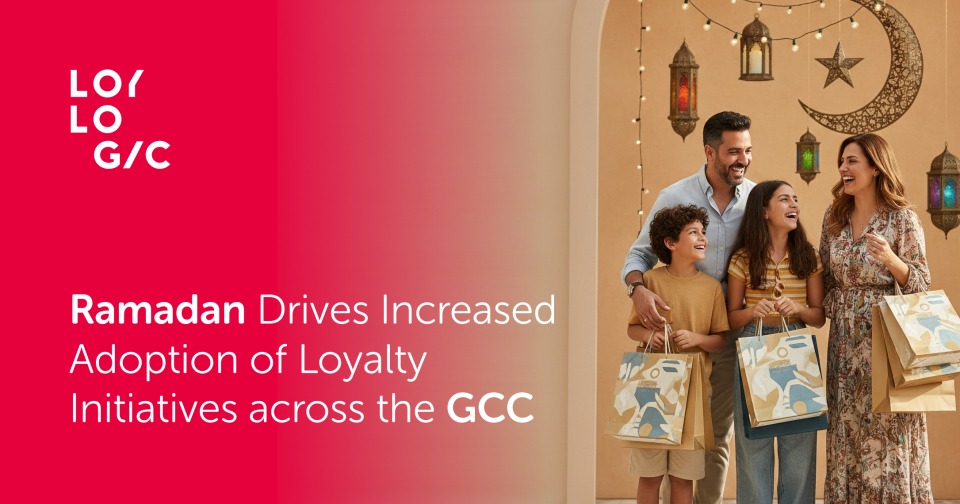
Ramadan drives increased adoption of loyalty initiatives across the GCC
Every year, Ramadan reshapes consumer behavior across the GCC, inspiring generosity, reflection, and deeper community engagement, while also accelerating spending, loyalty participation, and the adoption of innovative incentive strategies.
Make every moment perform
See how our rewards infrastructure helps you influence behaviour and drive measurable results.